





Microsoft (MSFT)

Microsoft (MSFT) is one of the most strategically advantaged businesses in global enterprise technology, with a business model that sits at the center of how organizations work, build software, and run infrastructure. Through its dominant positions in productivity software,
cloud infrastructure, and developer tools, Microsoft has built a deeply integrated ecosystem.
With operating margins in the mid-30% range, substantial free cash flow, and a balance sheet that supports continued reinvestment, Microsoft combines growth and durability in a way few companies can. As valuation and earnings visibility have become better aligned, we initiated a 3.5% position to reflect Microsoft’s role as a foundational compounder within the portfolio.
Enterprise Software Consolidation Toward Integrated Platforms
Microsoft’s model remains supported by mission-critical software spending, long-term contracts, and high renewal rates. Even in mixed macro environments, Microsoft tends to hold up well due to the essential nature of its offerings and the productivity/efficiency ROI it delivers.
AI Monetization via Distribution Advantage
Microsoft has one of the best installed bases in software (Office/365, Windows, Teams, Security, Dynamics). This creates a clear path to monetize AI through “attach” opportunities – where Copilot and AI services become incremental high-value add-ons layered on top of
products customers already use.
Cloud Computing (AZURE)
Cloud migration remains early for many enterprises, and Microsoft continues to gain share through a broad cloud platform (compute, data, security, developer tools). We believe Azure has a long runway for durable growth as customers modernize infrastructure, consolidate vendors, and build AI-native applications over time.
Security Spend as a Durable, Non-Discretionary Priority
As cyber complexity increases, security remains a mission-critical budget item for enterprises regardless of the economic environment. Security spend tends to be resilient, and AI capabilities (automation, detection, response) should further strengthen Microsoft’s value
proposition over time.
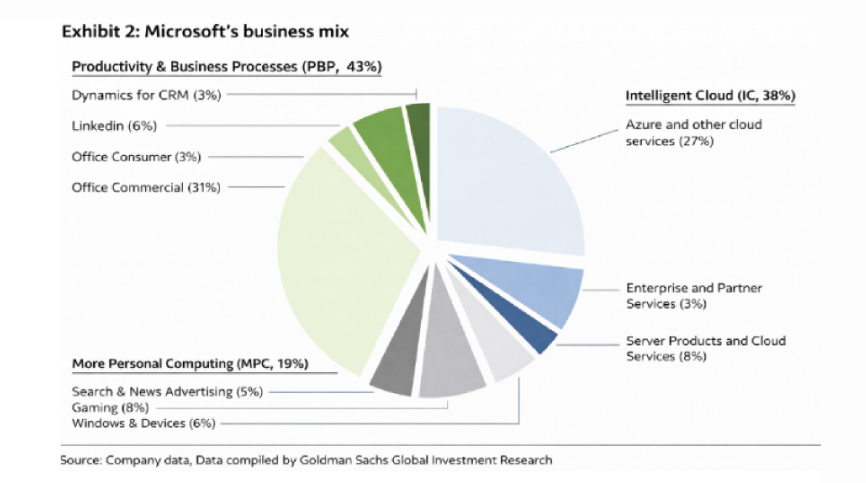
Productivity & Business Processes
Microsoft 365, Teams, LinkedIn, and Dynamics create high-frequency engagement and recurring subscription revenue, with AI enabling new upsell opportunities through Copilot and workflow automation.
Intelligent Cloud
Azure is the company’s core growth engine, supported by server products and enterprise services. Azure benefits from scale, customer stickiness, and long-term tailwinds from cloud migration and AI workload growth.
More Personal Computing
Windows, devices, and gaming provide diversification and broad consumer/PC exposure, while also serving as distribution channels for Microsoft’s ecosystem.
Enterprise Ecosystem Lock-In
Microsoft’s software stack is deeply embedded in day-to-day workflows, making switching costly, operationally complex, and disruptive.
Distribution and Bundling Power
Few companies can reach global enterprise customers as effectively, and Microsoft can monetize new products quickly by attaching them to existing relationships.
Scale, Trust, and Compliance
Large enterprises require security, governance, and compliance capabilities—areas where Microsoft has built deep credibility and product strength over decades.